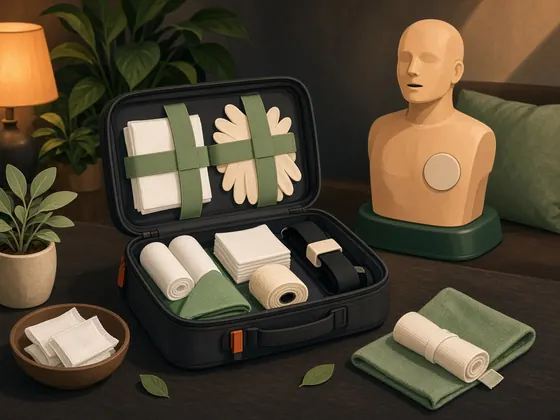
First Aid Basics Every Household Should Know
In a disaster, help can take hours. These are the basics every adult and teen should know. They are reminders, not training. Take a class.
1. Check, Call, Care
- Check the scene for danger before you approach. Then check the person.
- Call 911 or your local emergency number.
- Care for the person until help arrives.
2. Hands-only CPR
- Tap the person and shout. Check for normal breathing.
- If there is no normal breathing, call 911 and send someone for an AED.
- Push hard and fast in the center of the chest: at least 2 inches deep, 100 to 120 times a minute.
- Keep going until help arrives, an AED is ready, or the person starts breathing.
3. Stop severe bleeding
- Make sure the scene is safe. Call 911.
- Find the source of the bleeding.
- Apply firm, steady, direct pressure with a clean cloth or gauze. Do not lift it to check.
- For limb bleeding that will not stop with pressure, a tourniquet may be needed. Learn how in a free or low-cost Stop the Bleed class.
4. Poisoning
If the person collapses, has a seizure or cannot breathe, call 911. Otherwise call Poison Control at 1-800-222-1222 (US) or use poison.org. Have the product with you. Do not make the person vomit unless Poison Control or a doctor tells you to.
5. Carbon monoxide
Headache, dizziness, weakness, nausea and confusion can mean CO poisoning. Get everyone into fresh air and call 911. See the CO guide.
Get trained
The American Red Cross offers first aid and CPR classes. Stop the Bleed lists bleeding control classes. FEMA's CERT program trains volunteers in disaster medical operations and light search and rescue.
Build a kit: see the first aid kit buying guide.
Recommended gear
Affiliate disclosure: Some links on this page are affiliate links. If you buy through them, we may earn a commission at no extra cost to you. As an Amazon Associate I earn from qualifying purchases. Read our affiliate disclosure.
Sources
- American Red Cross: First Aid Steps
- American Red Cross: CPR Steps
- Stop the Bleed (American College of Surgeons)
- Poison Control (1-800-222-1222)
- CDC: Carbon Monoxide Poisoning Basics
- American Red Cross: Take a Class
- Ready.gov / FEMA: Community Emergency Response Team (CERT)
Sources checked 2026-11-17. Official guidance changes; always follow your local authorities.